How Much Does Event Interpretation Cost in the UK? (2026 Guide)
If you're planning a conference, exhibition, meeting or corporate event and need interpretation services, one of your first questions is probably: how much is this going to cost in my event budget?
The short (and probably somewhat annoying) answer is: it depends. But that's not very helpful when you're trying to build a budget, so here's the longer answer, broken down by every cost factor that actually matters, with practical guidance from our team at TranslateAble, the only language agency created specifically for the events industry.
Whether you're looking for simultaneous interpretation at a multi-day international congress or consecutive interpretation for a one-to-one meeting, this guide will help you understand what drives the price and how to get the best value.
It's also shaped by 20+ years of lived experience. Before founding TranslateAble, Julia Danmeri was an event operations leader delivering complex international events, which means she sat on both sides of this conversation.
What Is Event Interpretation?
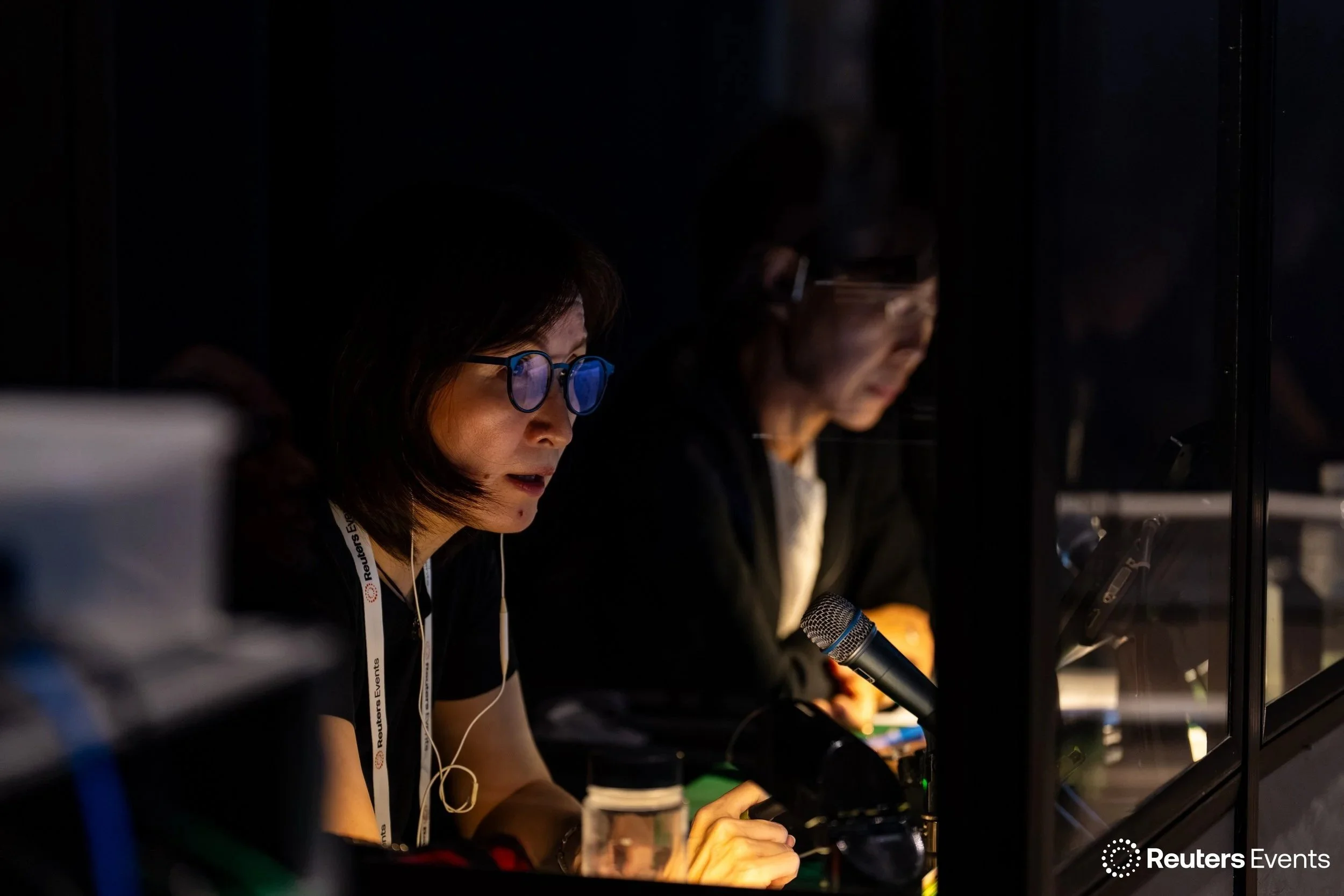
Event interpretation is the real-time, spoken translation of content at live events. Unlike document translation (which is the written conversion of one language to another), interpretation happens in the moment and is designed to keep your delegates engaged, informed and included no matter what language they speak.
There are several types of interpretation used at events, and the type you choose is one of the factors in your cost.
The Main Cost Factors
1. Type of Interpretation: In-Person vs Remote
In-Person
Interpreters work in soundproofed booths, so the size of the booth needs to be accounted for. They interpret in real time as the speaker talks, while delegates listen via receivers and headsets. This is popular for conferences, trade shows and large-format events, especially when the organiser is concerned about reliability of internet connections, which are necessary for remote interpreting.
Remote interpretation
Interpreters work from their home studio, connecting to your event via an interpreting platform. Travel and accommodation costs are eliminated, which can significantly reduce the overall price. This is ideal for virtual and hybrid events and increasingly used for in-person events too.
Do take into consideration that while you save on travel and accommodation, there are additional costs incurred for remote interpreting that are not required for in-person, so sometimes this means the costs balance out.
At TranslateAble, we always compare remote and in-person options for our clients and present both. We recently saved one client £200,000 by recommending remote interpretation when it was the smarter fit for their event format.
2. Language Combination
Some language pairs are straightforward to staff and quote; others require highly specialist professionals who command more of your event budget. A few things to factor in:
Common language pairs: languages common to the location of the event are generally more competitively priced due to interpreter availability, for example English<>French in Paris or English<>Spanish in Madrid. The more common a language globally, the more competitive the rate whether in-person or remote.
Less common or regional languages: language pairs which are not the local language of the event location such as English<>Finnish in Nairobi for example, will typically cost more, as the pool of qualified event interpreters is smaller. This also applies to languages with smaller global interpreter pools such as English<>Farsi.
If your event covers a highly technical subject, for example energy, finance, medical or legal, your interpreter must have subject-matter expertise as well as language fluency. This narrows the pool and requires longer lead time if possible.
At TranslateAble our ever growing network means that we’re able to source the right professional, with the best experience for your event.
Which leads us to…
3. Sourcing Local Language Professionals
Where your interpreters are travelling from has a direct impact on cost. If you're sourcing interpreters from another city or country, you'll need to factor in travel, accommodation and potentially subsistence.
At TranslateAble, we prioritise local sourcing. In 2024, 86% of our onsite event assignments were fulfilled using interpreters and technicians based in or near the event city. This reduces costs for clients’ event budget, lowers the carbon footprint of the event and supports the event location’s local community.
If your event is overseas , a specialist agency with a truly global network like TranslateAble makes a significant difference in cost here. TranslateAble’s quotes are also based on local rates rather than a blanket rate being applied.
4. Event Length and Schedule
Interpretation is typically quoted per day and the number of hours and days your content runs directly affects the total cost. Key considerations:
For anything longer than 30-45 minutes, interpreters generally work in pairs, alternating every 20 minutes or so. Full conference days require interpreter rotation to maintain accuracy. Interpretation is a tough job and fatigue is real! Two interpreters per language booth is a minimum; three may be recommended for programmes with few / without breaks or for certain languages.
Short keynotes or single sessions are more straightforwardly priced, but you'll still need to account for briefing and preparation time.
5. Equipment
In-person interpretation requires specific equipment, including interpreter booths and headsets. This is typically either hired from a specialist AV or technical supplier, or arranged through your language agency.
At TranslateAble, interpreting equipment is fully integrated as part of our service via our network of global partners. This matters as it saves organisers time sourcing to separate suppliers for one event
For remote interpretation, you'll need a remote interpreting platform, robust internet connection and a video feed (a static camera will normally suffice). As part of our service at TranslateAble, we’re able to provide the interpreting platform if required.
6. Number of Languages
Each additional language adds cost: another pair (or more) of interpreters, an additional booth. If your event serves audiences in five languages, you'll need five full interpreter teams running simultaneously.
What About AI Translation and Hybrid Solutions?
AI translation has opened up language accessibility to a wider range of budgets. For events where budget is the primary constraint, AI captioning can be a practical starting point.
However, AI captioning is not always a direct replacement for professional interpretation, and the following must be taken into consideration:
Accuracy can drop with strong accents, regional dialects or technical terminology.
AI platforms vary widely in the languages they support in each direction
For emotionally sensitive content, technical sessions or high-profile proceedings, AI errors can be disruptive or damaging.
Choosing the right captioning solution for your event isn't straightforward as platforms vary significantly in the languages they support, their accuracy with different accents and subject matter, and their price points.
At TranslateAble, we continuously research and test the leading options on the market so you don't have to. Tell us your brief and we'll advise on the best solution for your event.
"The TranslateAble attitude is very much 'don't worry, we've got you', which is something you really appreciate in any supplier."
Head of Customer Success
What Does Event Interpretation Cost? A Rough Guide
We're deliberate about not publishing a fixed rate card here because our experience tells us that every event is different and publishing generic prices can set false expectations in either direction.
What we will say:
Simultaneous interpretation for a two-language conference running two days in London will look very different from a single consecutive interpreter for a half-day briefing in Birmingham.
It's a myth that remote interpretation always costs less than in-person. Costs depend on the specifics of your event and in some cases in-person works out more competitively. The right choice depends on your format, your audience and your location. We'll always recommend whichever delivers the best result for your budget.
The most common mistake we see is clients comparing quotes without aligning the specifications. Different interpreter experience levels, different equipment quality and different levels of project support can all produce quotes that look similar on paper but deliver very different results.
The best way to understand what your specific event will cost is to get a quote from a team that gets events. At TranslateAble, we provide clear, itemised proposals that let you see exactly where your budget is going and we'll always tell you if there's a smarter way to achieve the same result for less.
How to Get the Best Value
A few principles that our event-industry background has taught us:
Brief early. The earlier you engage your language provider, the more options you have including local sourcing, which reduces cost significantly.
Share your full programme including breakouts, networking and any evening content. Language needs don't always stop when the main stage does. The bigger picture we can build of your event, the more we can advise on the best options available to you
Tell us your budget. A good language agency will be honest with you about what's achievable within it and if the budget doesn't stretch to what your event needs, they'll tell you that too, rather than overpromising and underdelivering.
Ask about subject-matter matching. Interpreters who know your industry deliver better results.
Consider the total cost of poor quality. A cheaper quote that produces inaccurate interpretation or equipment failures costs far more in reputational terms than you save.
"From start to finish, it was just a dream to work with Julia and the team. I gave Julia a budget, and she worked her magic." Senior Event Manager
Ready to Get a Quote?
TranslateAble is the only language agency created specifically for the events industry. Our founder, Julia Danmeri, has over 20 years of experience as a multilingual global event operations leader, which means we understand your pressures, your timelines and the standards your delegates expect.
We provide in-person and remote interpretation, sign language interpreting, translation, subtitling, localisation and more.
Get in touch to discuss your next event. We'll respond quickly, ask the right questions, and give you a clear, honest quote.