Remote Interpretation vs. In-Person Interpretation: How to Choose
When planning live interpretation for your event, one of the main decisions is whether it should be delivered in-person or remotely. Both options have practical considerations, benefits and cost implications however, choosing the right approach can make a big difference for your event budget, logistics and of course, attendee experience.
And it’s not always a given that one option is more cost effective that the other, it very much depends on the event and specific interpretation requirements.
If you’re not sure which option is right for your upcoming event, here’s a handy guide to get you started. Whether you’re ready with your RFP or still exploring options, we recommend getting in touch with a member of the TranslateAble team. We can help with your planning from the outset, saving you countless hours figuring out how to deliver interpretation for your event.
In-Person Interpretation
For in-person events, interpreters work onsite with booths, headsets and technical support. This setup is ideal for simultaneous interpretation for events where audio quality, flow and immediate interaction are critical.
Three key considerations event managers should know for in-person interpretation:
Audio feed only: No internet connection is required, as interpreters work directly from the audio feed (a potentially expensive save on your event budget).
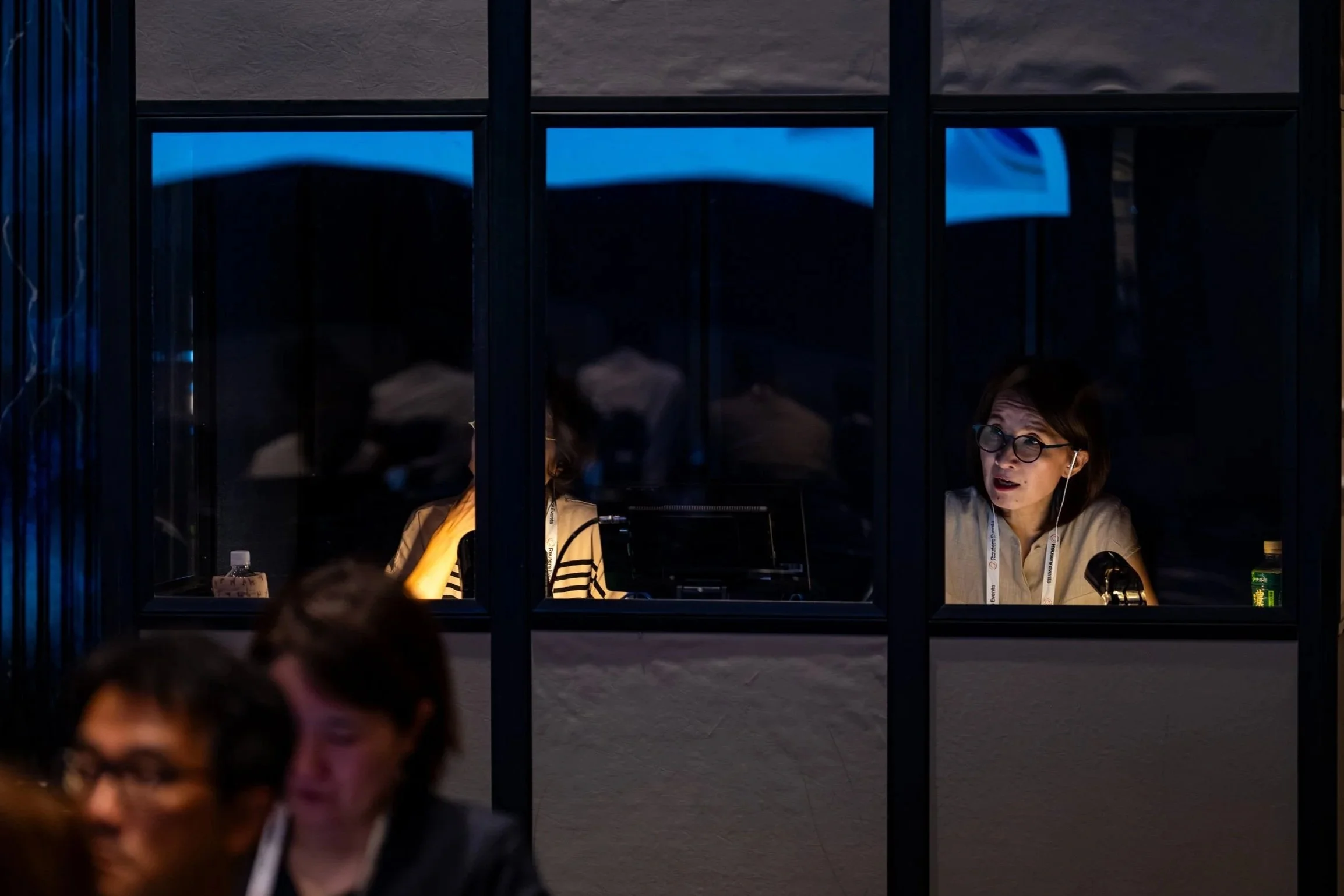
Interpreter booths: Ideally, each interpreter would have their own space within the event room or near by. Each booth (approximately 2m x 2m) should have a clear view of the speaker or stage. Booths also need an electrical socket and chairs for interpreters. If a a clear view of the stage isn’t possible, a monitor can be installed within the booth which shows the stage. (Insert photo)
Green room and breaks: Most events require more than one interpreter, so consider how you will accommodate your language professional team onsite. If interpreters are required to interpret for over 45 minutes they generally work in pairs, alternating every 20-30 minutes. If you’re having interpreters for a full day event, they also need a mid-morning, lunch and mid-afternoon break.
A word on travel: At TranslateAble, we prioritise local professionals, reducing travel costs and environmental impact. All our interpreters are fully trained, qualified and vetted through CV checks, references and one-to-one interviews.
In 2024, 98% of our onsite assignments were delivered using local interpreters and technicians cutting costs, travel, and emissions while supporting local economies and communities. Find out more (link to website).
Remote Interpretation
Remote interpretation uses specialised platforms, remote technical support and headsets. The main advantage for your event design is space as you don’t need to allocate booths or rooms for interpreters and technical staff to be onsite.
Key requirements for event managers to consider for remote interpretation include:
Audio and video feed: A reliable feed is essential for interpreters to deliver real-time interpretation for events accurately (which isn’t necessary with in-person interpretation). Video can just be a static camera, it doesn’t require a camera technician. As with in-person interpretation, any event content you can provide in advance is a huge advantage.
Internet connection: A strong, stable internet connection between your language team and the event is essential to ensure no issues on the day.
There are usually two setup options to choose from:
Remote interpreters with onsite tech support and headsets for attendees.
Interpreters and tech are both remote, with attendees using their own headphones which is more cost-effective.
Platform selection and costs: The choice of interpreting platform is crucial. Some language agencies require you to adopt their own platform, but at TranslateAble, we have experience in using multiple event tech and translation platforms. We select from multiple options depending on the event size and requirements. We’re also happy to adapt to your AV supplier or a platform you’ve used previously.
Which Option is Right for Your Event?
Not sure whether in-person or remote interpretation is best for your upcoming event? TranslateAble ensures this is discussed during the initial call, as it can impact your budget and required resources. We provide both in-person and remote language services and often compare the cost of each to help you make an informed decision.
For example, we helped an event team save £200,000 simply by offering two interpretation options with identical outcomes, one of which was nearly half the cost. By offering multiple services, we give event teams clear options and enable them to compare language services easily.
This supports better budget planning and makes language services a ‘no-brainer’ for future events.
Looking for interpretation support for your upcoming event? Get in touch with the TranslateAble team today to get started.